Propane FAQs

Our Expert Answers To Your Propane Questions.

After more than seventy years serving propane customers in North Carolina, we’ve answered many questions and discovered solutions to unique challenges. Furthermore, if you have questions, contact our experienced team. We’ll get you answers!

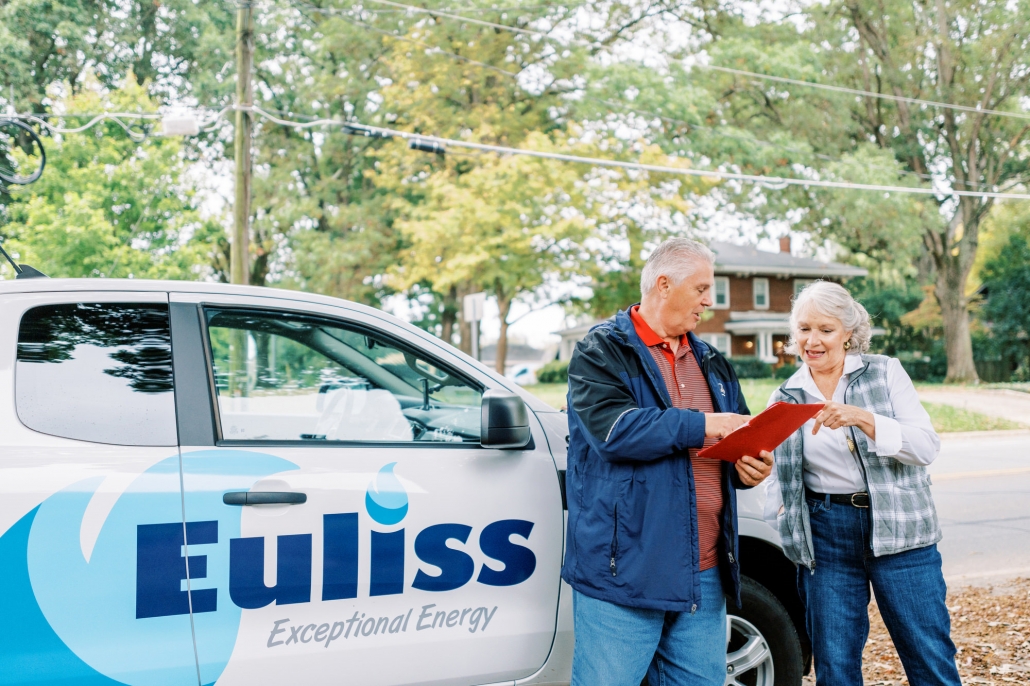
customer by Euliss truck

We are always happy to hear from our customers. If you experience one of the following situations, contact a member of our team:

  • If you smell propane
  • If you suspect a leak in your system
  • If you need a propane appliance connected or disconnected
  • If you’re moving or there is a change in a tenant status
  • If you purchase a new or replace an existing propane appliance
  • If you have plans for an outdoor project that involves digging
  • If your life changes due to the birth of a child or one going to college

Because propane is an odorless gas, manufacturers add ethyl mercaptan to make it smell like rotten eggs, skunk spray, or a dead animal. This smell alerts you to the possibility of a leak in your gas lines or equipment. Also, if you suspect a leak, contact us asap. Not sure if you would recognize the smell? Give us a call. We’ll send you a scratch-and-sniff brochure or let you smell it the next time we are filling your tank.

Choosing the business and people who visit your home can be challenging. We’ve made it easier with these qualified recommendations:

  • Get Referrals: Ask friends, family and neighbors who they use for propane. A referral is the best endorsement and helps promote peace of mind.
  • Do Some Research: Learn about the suppliers by researching their experience, how many customers they serve, and how long they’ve been in business.
  • Ask Questions: Ask your propane representative these questions before making your choice:
    • Are your technicians up-to-date on the latest installation and service procedures?
    • Do your employees have continuing education requirements?
    • Are you certified through the Gas Association Program?
    • Can you perform Gas Checks? Gas Checks is a licensed voluntary program to inspect residential propane systems (lines, furnace, appliances, etc.) to ensure safety.

Yes. Propane is nontoxic and insoluble in water. Once liquid propane is released from the tank, it becomes a gas, meaning it cannot spill, pool or leave a residue. It won’t contaminate groundwater, so it is considered safe to store underground. A gallon produces about half the carbon dioxide (CO2) as a gallon of fuel oil. Compared to the individual per BTU of fuel, it releases less CO2 than ethanol, gasoline, bio-diesel, kerosene, or coal. An electric water heater produces 150 times the amount of greenhouse gas emissions as a conventional propane gas water heater. The Environmental Protection Agency (EPA) approved it as an alternative fuel in the Clean Air Act of 1990 and Congress made similar proclamations in the National Energy Policy Act of 1992.


We recommend you keep your water heater at 130 degrees. Maintaining a temperature 10 degrees cooler than traditional water heaters will save you more than 10% on your water-heating bill. We think you won’t even feel the difference.

Propane delivers so many benefits that we’re honestly surprised it’s not used more frequently.

  • It’s clean: Propane burns clean, emitting fewer emissions than virtually any other power source. The EPA rated it an alternative fuel in their Clean Air Act of 1990.
  • It’s affordable: Current estimates show propane costs 30% less than electricity to power the same appliances and equipment.
  • It’s fast: Propane heats up faster than electric, meaning you get the same amount of comfort using less power.
  • It’s American: 90% of the propane used in the United States was manufactured right here.

Vent-free logs are rated as a heating appliance and do not require venting to the outside. Vented logs are rated as decorative and require venting to the outside. Heatmaster log sets are CSA-certified, both vent-free and vented.

No. You can use vent free gas logs but not vented logs. However, vented logs require a working flue, the same as burning firewood.

Yes. Gas logs should be serviced at least annually by a qualified service person.

You can increase your water heater’s efficiency by draining it every six months to remove lime deposits and sediment.