
How to Buy or Sell a House with a Propane Tank
Propane tanks affect home sales more than many buyers and sellers realize. Whether the tank is owned or leased can influence everything from service transfers to what happens right after closing.
For homeowners and buyers alike in Central North Carolina, understanding how propane tanks factor into a home purchase helps prevent delays, confusion and last-minute stress. Here’s what you should know before you buy or sell a home with propane.
Owned or Leased? Why Propane Tank Ownership Matters
Tank ownership is one of those pieces of information that never really matters, until it does. That said, it’s one of the most important details in any propane-related real estate transaction.
In short, a leased propane tank stays with the propane company, while an owned tank usually transfers with the home. Whether you’re a homebuyer from Greensboro or a seller in Liberty, this distinction plays a key role in service transfers, safety inspections and what happens once the keys change hands.
Confirming tank ownership early keeps the transaction on track and confusion to a minimum.
Before You List: Propane Tank Tips for Sellers
The good news is that selling a home with a propane tank is usually straightforward, especially when a few key steps are handled early. If you’re preparing to list your home, remember the three Cs:
- Confirm tank ownership. Determine whether the tank is owned or leased and gather any related paperwork.
- Contact your propane provider. They can explain next steps and help coordinate service adjustments or inspections if needed.
- Communicate with your agent and buyer. Full transparency about the tank helps prevent delays during closing.
Handling the three Cs early keeps the transaction smooth and reduces last-minute questions.
What Buyers Should Know About Propane Tanks
Buying a home with a propane tank doesn’t have to be complicated, but it’s better to be ahead of the curve. For buyers, it comes down to asking the right questions early. Before closing, focus on the three Ws:
- Who owns the tank? Confirm whether the tank is owned or leased.
- When should you contact the service provider? Understand which propane company currently services the home and what’s required to transfer service.
- What’s required after closing? Ask about inspections, safety checks or account setup.
Getting clear answers to these questions upfront helps you start homeownership with confidence.
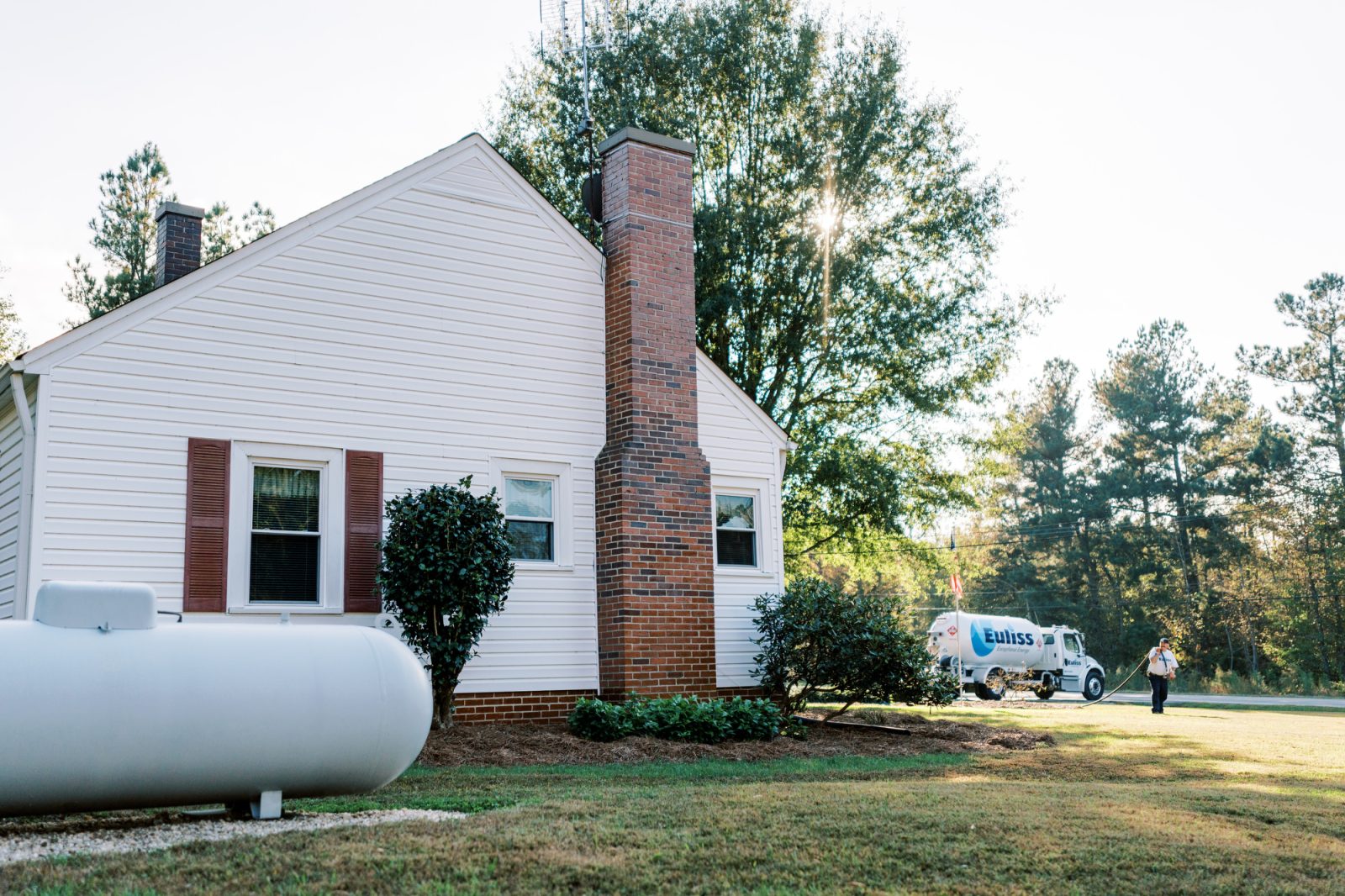
Selling a Home with Fuel in the Tank
It’s a question we hear a lot: “Can I get a refund for the propane I already paid for?” The short answer is, unfortunately, no. But there is a win/win solution.
Include the remaining propane in the closing contract to ensure the seller is reimbursed while the buyer keeps their heat and hot water.
Make sure to let Euliss know as soon as a sale is pending so we can transfer the account and complete safety checks without any interruptions.
Keep Your Closing Carefree with Euliss Propane
With decades of experience in Central North Carolina, we’re uniquely positioned to be a trusted guide to both buyers and sellers when closing on a home purchase. Reach out to our friendly team so we can help you handle inspections, service transfers and answer any questions along the way.
References:
Propane Education & Research Council (PERC)
National Propane Gas Association (NPGA)
State propane safety regulations (NC)